About Hops
Built from both sides of hospitality.
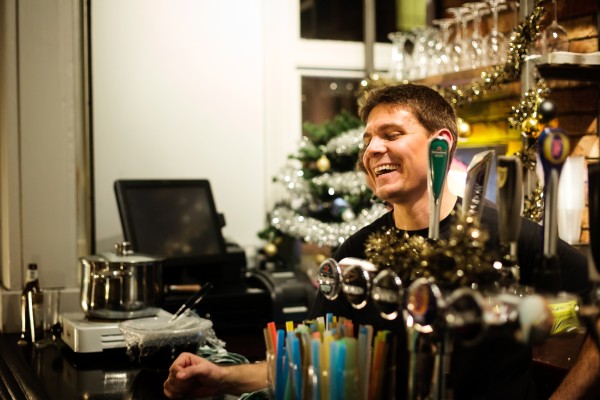
Hops was shaped by two people who arrived from opposite ends of the same industry. One spent years building point of sale and infrastructure at scale. The other opened his own restaurant, then ran high volume sites. Both learned the same thing: software either survives live service, or it does not.
Built byOperators and the people who built the systems they had to use.
Built forPurchasing, stock, invoices, cash-up and the accounts that depend on them.
Built aroundHow an operation already runs, rather than one prescribed workflow.
Two entry points
They came from different directions and hit the same problems.
01
Robbie Francis
From the technology side
After years building and implementing point of sale and infrastructure at scale in retail, Robbie expected hospitality systems to work in much the same way. Live service exposed a different set of operational problems: systems that worked in principle, but which nobody could keep on top of once service started.
02
Aaron Resch
From the operations side
He opened his own restaurant, United Ramen, then ran high volume sites including Big Easy Canary Wharf, Red Dog Saloon and The Boundary in Shoreditch. He met the same fragmentation from the other end: spreadsheets standing in for systems, and margin problems that only surfaced weeks later.
"I was using spreadsheets to try to figure out GP because I could not afford bigger systems and no one really taught me how to control costs."
"Every business I walked into, the system was a mess, not because it could not work, but because no one could keep on top of it."
Robbie Francis and Aaron Resch, founders of Hops
How Hops is built
Two principles, and they are not negotiable.
Connected
Systems and data that previously did not speak to one another.
In practice
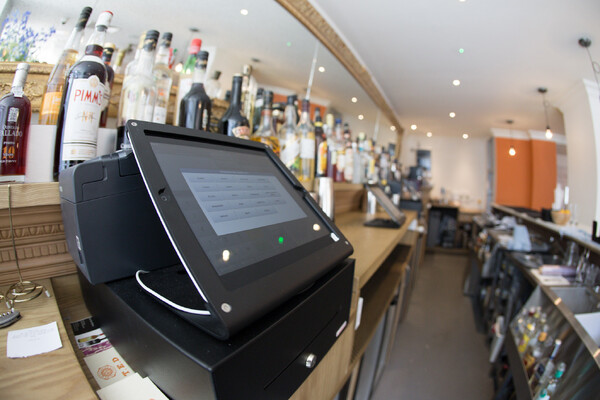
Sales from the till reach the accounts without anyone retyping yesterday.
Supplier invoices land on the purchase ledger on approval, not invoice by invoice.
Stock value at period end becomes a journal on close, not a spreadsheet and a hope.
Configurable
Hops fits how an operation runs rather than forcing every operator into one prescribed workflow.
In practice
Sites, departments and approval routes are shaped around the operation, not the software.
A new opening inherits its setup from the group instead of starting again.
Operators drive product direction, which is why the shape keeps matching the work.
Operator proof
"You can really tell Hops has been built by operators. They provide a solution that is exactly what we want, instead of us adapting to a system."

Dominique Fernandes
Head of Operations, Mildreds

A free educational platform for everyone in hospitality operations.
Theory and practical skill, an active operator community, and certifications recognised in the industry. Open to everyone in hospitality, not just Hops users.
Certifications are unaccredited and recognised by those working in the industry.
Visit Hops Academy↗