“More than the system, it’s the team”: rolling Hops out across 33 Dicksons shops
How Dicksons connected production, recipes and shop-level profitability, with hands-on support through a 33-shop rollout.
HOPS Team
Hospitality Operations
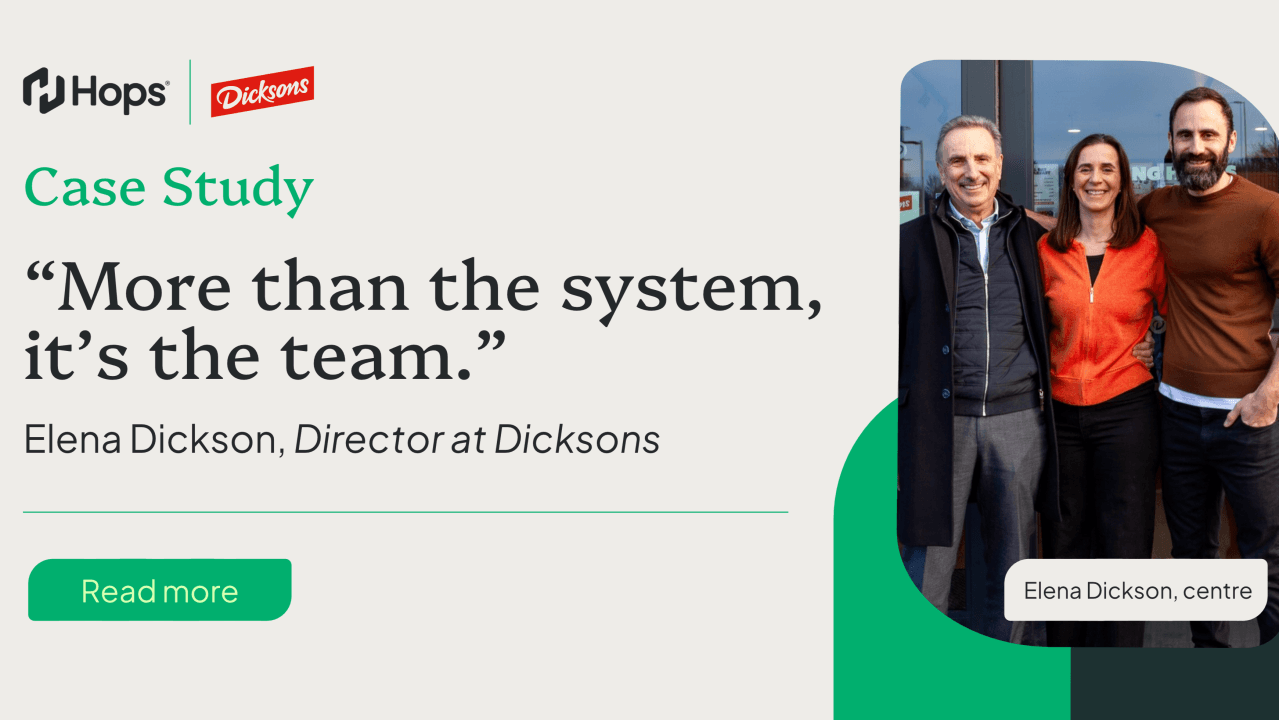
Dicksons makes its own products and sells them across 33 shops. Its manufacturing site and retail teams need to work from the same information: what leaves production, what arrives at each shop and what sells at the counter.
When the family business replaced the bespoke ordering system it had used for 15 years, Director Elena Dickson led the change. New tills came first, followed by Hops for ordering, stock and daily cash-up.
Connecting ingredients to sales
The old process did not connect goods delivered to shops with the ingredients used in sales. Knowing how many sandwiches sold did not tell the team whether each sandwich used its intended portion of ham. A larger portion could consume the margin designed into the recipe.
With recipes built from ingredients and linked to till sales in Hops Inventory, stock is drawn down ingredient by ingredient. Each shop is treated individually, giving the team a view of product mix and gross profit at site level.
That detail matters for a business that both manufactures and retails its food. The cost built into a product on the production floor needs to remain visible when it reaches the shop counter.
One trial shop before all 33
Dicksons began with one trial shop in March before extending the rollout across the estate. All 33 shops were live by the beginning of July, alongside the manufacturing site.
Elena built the setup in a shared live spreadsheet. The Hops team could see her questions as she worked, helping resolve them during the migration. Nathan Moorhouse, Sales & Integrations Lead at Hops, supported her through regular calls, Teams training and videos answering Dicksons’ questions.
The approach gave Elena a way to build the system alongside her existing responsibilities in marketing and product development. It also gave the team a direct route to discuss requirements specific to manufacturing, including breaking product costs down into ingredients.
Practical changes for shop teams
Shop teams now order from lists containing the products they actually sell. Elena describes daily cash-up as “much swifter and easier”. The connection between recipes and sales also gives the business a closer view of each shop’s performance.
The rollout was supported by the wider team, including Ethan’s coordination of engineers for the new till hardware through Eposability and Lightspeed. Elena highlighted how readily the team answered questions when issues arose.
Support that continues after go-live
Elena’s strongest recommendation was about the people behind the implementation:
“More than the system, I think it’s the team… they are committed to deliver a really good product.”
Elena Dickson, Director, Dicksons
Regular check-ins and direct contact with Hops continue after the rollout. For Dicksons, the value was a team that understood its operating model and could give clear answers about what was possible and when.
If you run several sites, or make and sell your own products, explore how Hops supports operators or speak to the team about your own rollout.
View the original LinkedIn post: Read the original Dicksons case study on LinkedIn
Tags