Meet Ally, Hops' Customer Success Manager
Ally has washed up, waited tables, cut kebabs at 2am, run kitchens and built multiple hospitality businesses from the ground up. Now she's the person Hops who trains all of our customers and is the one clients call mid-crisis, when the cash-up won't balance at the end of the day.
HOPS Team
Product & Operations
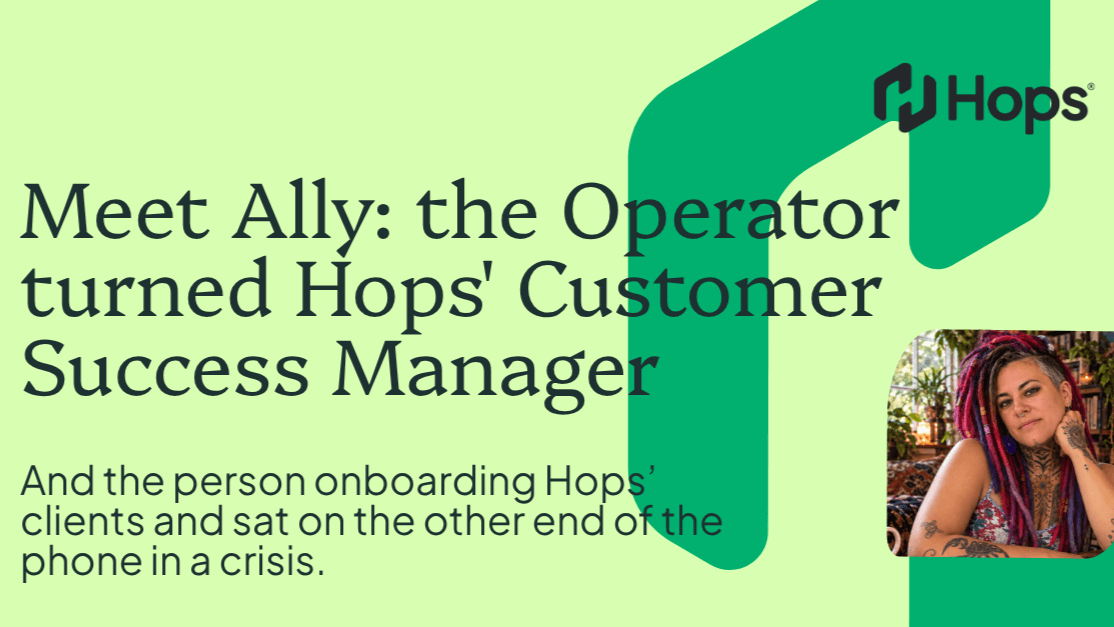
Ally Parsons learned hospitality the way most operators do: on shift, running the floor and cashing up at the end of a long day.
She started as a washer-upper and ended up managing an Italian bistro whilst still a teenager in London. Since then she has worked at late night takeaway joints, trained up as a chef, run a community kitchen and spent a decade in Egypt running bars, restaurants, a B&B and a nightclub of her own.
All of that experience proves invaluable as Customer Success Manager at Hops where she onboards clients, trains their teams and takes their calls. She knew Hops as a client first, using it day to day while working at Mildred's, long before she joined the team.
We asked her how life on the operator's side of the fence shapes the way she supports the people still on it.
1. You started in hospitality young. How did it all begin?
"I started working in hospitality at 13, as a washer-upper. Pretty unglamorous! And I quickly escalated to waitressing."
At 15, needing to earn a living, she talked her way into a job at an Italian bistro in south-east London. There, the GM took her under his wing. He taught her to cook and to manage staff, and gave her the foundations of the hospitality world, she took to it well. "I ended up managing this place at 16!".
2. Then you moved to Egypt. What kind of hospitality operations were you part of?
Ally is half Egyptian and spent around ten years there. It started with a members' club for the expat community, which she was asked to take over. "I ran that place for a year. I opened up four new bars, a children's play area, tuck shop, and revamped the entire place."
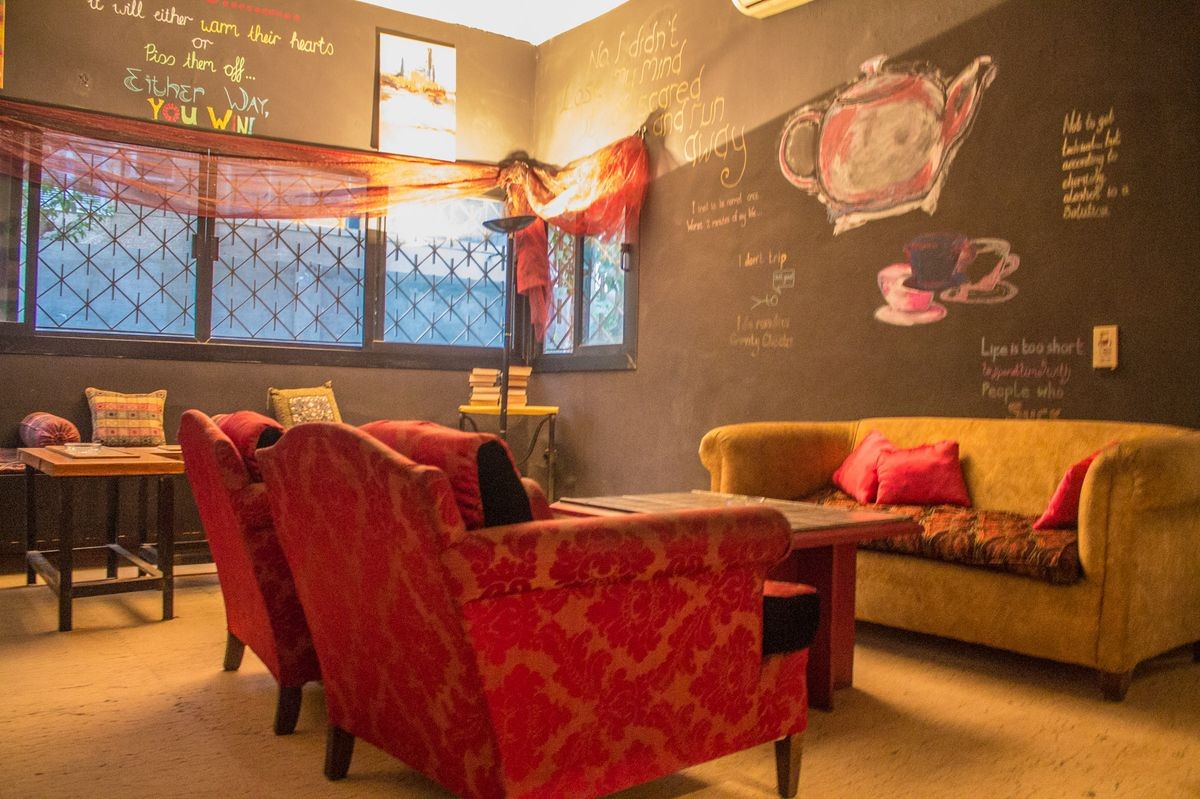
Then came her own venues. The Snug, a five-room B&B with a bar and kitchen downstairs, where "the bar was always four or five deep" and the menu was filled with home comfort food from all over the world, from New Orleans gumbo, to traditional mac and cheese, so everyone no matter where they were from would feel at home. Then there was The Tipsy Teapot, a 300-seat restaurant she calls "the experiment kitchen", to the Mad Hatter bar above it. And then Siren, a nightclub with a menu built around one rule: "We didn't want the food to need cutlery!."

Alongside each business she ran community projects, from a free nursery to interest-free loans for staff. "The way I could give back was creating this society where they were all looked after in the business."
3. What was stock count like in your venues?
"In most of the kitchens and the bars it was a daily end of day stock count. I know it was a bit strict. I was a bit harsh on it, but stock is my area, I suppose. I had to design my own system because we didn't have anything in Egypt."
She built it herself, with a specialist's help: Excel underneath, with screens on top so the team could use it as a system.
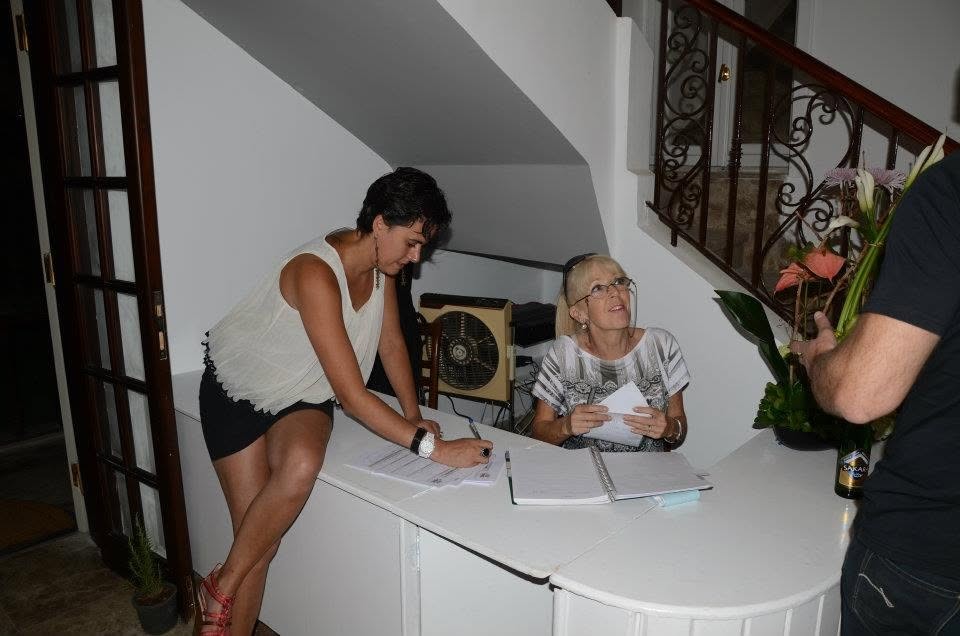
Each venue also had a reception desk that every bill passed through, staffed by people with a head for numbers (one has since become an accountant). At the end of the night, whoever ran the bar counted it and handed the figures to reception, so the numbers were up to date before anyone went home.
"Stock is my area!".
4. How did you find your way to Hops?
Back in the UK, Ally managed sites for a run of groups including GAIL's and The Breakfast Club. Her last role before going independent as a consultant was at Mildred's, and that is where she first started using Hops. She was a Hops user long before she was a Hops employee!
"I loved how simple the system was." She had worked with plenty of other stock systems by then, and knew the difference straight away. "I just thought, this is so much better."
When she went independent as a consultant, setting up stock systems, recipes and payroll for other operators, clients started asking her to recommend a stock system and implement it for them. She chose Hops every time, "because it was the easiest". She worked so closely with the team that a full-time role followed. Next January marks three years.
5. What's your favourite part of Hops to show an operator?
"The actual cash-up, because I don't think people realise what it is like to cash up in a business." She has done enough of them to know. "It's always the biggest drain at the end of the day, when you're tired, you've had a shift, running around being accommodating to customers, dealing with everything." Then the spreadsheet, the hunt for figures, the discrepancy to chase. "It used to be the worst part of the day, when you're finished and you just want to close the doors and go home."
In Hops, the figures are pulled in from the till. "You literally just open your screen, everything's already been pulled in, fill in the last couple of details and send it."
Stock take runs a close second. It is the thing she has always ended up teaching, because teams count without knowing why. "When they've got a variance they're at a bit of a loss, saying, well I've counted it. What else do you want me to do?"
Hops' new stock take answers that. Before anyone looks at variance, a health check flags what could be distorting it: invoices not closed, credits left in draft, menu items without recipes. Then it points to the biggest variances worth investigating, rather than leaving someone with a big mystery to solve. "That's the thing I love about Hops: it's designed to educate while you're using it." In an industry where "most people are short-lived", she says, that matters.
"Cash-up is always the biggest drain at the end of the day."
6. How does having been an operator change the way you support one?
"As an operator you're firefighting constantly." Staff not turning up, deliveries arriving missing items, an inspection, an owner chasing a KPI. "By the time you're calling up somebody to help with an issue in your system, you're screaming at them because you just need an answer now."
She doesn't take the heat personally, because she has been in their shoes. "They need to know that it can be fixed and everything's going to be okay."
7. What do you say to an operator who's been burned by a rollout before?
"We've had people using other systems where six months later they're still not onboarded." Others who were "basically given a video and told to just go off and do it", then left fighting their way out of a contract.
She lets prospective clients see for themselves: a conversation with a Hops customer who has been through the same thing, or time on a demo account to try it out. And a commitment.
“We will hold their hand all the way through the process. We're not just going to disappear.”
That is built into how she onboards. Four or five set-up sessions in the first couple of weeks, training on ordering, transfers, wastage, stock take and recipes, then four variance reviews with every client, so they learn to trust the numbers before they're left to run with them.
And it doesn't stop once they're up and running. She checks in every few months, and sometimes she just drops in for a coffee and a catch-up to see how things are going.
8. What would be your desert island dish?
"I love pork belly. It's my top favourite thing to have." Ideally from a restaurant, because her own never quite gets that crispy skin. "Every time I make pork belly, it's not as good as it is out." The reason, she admits, is very operator – "I think I'm too impatient!".
Ally has spent her working life on the operator's side of the pass. That is what every Hops client gets when they pick up the phone: someone who knows what the end of a long shift feels like and who won't disappear once the system is live.
If you'd like to see Hops in action, book a demo with a team that has been in your shoes here.
Originally published on LinkedIn: Meet Ally, Hops' Customer Success Manager.
Tags