Why hospitality teams stop trusting their stock systems
Trust is often lost through small operational frustrations that build over time.
Ally Parsons
Customer Success Manager at Hops
Inventory and stock software received the lowest operator score in a recent UK hospitality technology index. That should make technology providers uncomfortable. It should also make us curious.
I have worked in hospitality for more than 30 years, both as an operator and now as Customer Success Manager at Hops. During that time, I have used several stock systems in different businesses. – Ally Parsons
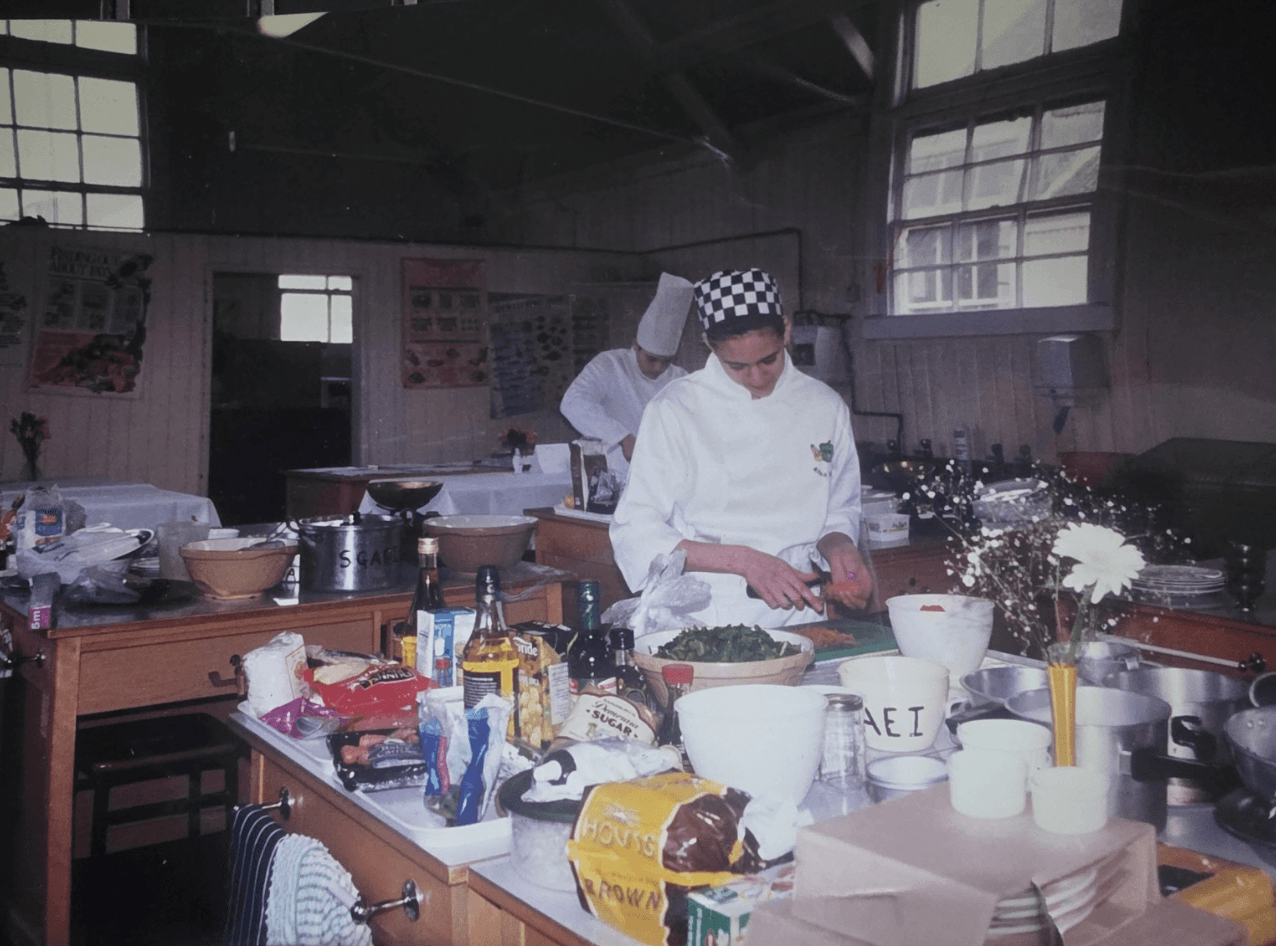
Ally training as a chef, aged 19
The result does not prove that every inventory platform is failing. It does, however, point towards a trust and adoption problem that the industry needs to take seriously.
I have worked in hospitality for more than 30 years, both as an operator working with the likes of Gails and The Breakfast Club and now as Customer Success Manager at Hops. During that time, I have used several stock systems in different businesses.
When a system reflects how a venue genuinely operates, it can provide valuable control and visibility.
When it does not, teams quickly find ways to work around it.
The trust problem
The first Stacked Intelligence Scoring Index assessed 558 verified operator reviews and 3,053 reported technology records from 550 UK operator brands.
Of the six technology categories with enough evidence to receive a full ranking, inventory and stock software came last. It scored 67.6 out of 100, with average operator satisfaction of 3.31 out of 5.
Stacked is a commercial hospitality technology platform, and its dataset is not a complete measurement of the UK market. However, the result is still a useful signal.
Trust is often lost through small operational frustrations that build over time.
Operators appear to be losing confidence in systems designed to control one of their largest costs.
The reasons are not always dramatic. Trust is often lost through small operational frustrations that build over time.
When the system creates more work

Ally on the floor at The Breakfast Club holding a baby, to allow her mother to eat!
When I worked at one multi-site venue, we used a popular inventory management platform (that shall remain nameless!) before the business moved to Hops.
One of our biggest difficulties was the stocktaking process.
The stock list had inherited a large number of products, including items we were no longer actively using. We could not produce a clean count sheet containing only the products relevant to the current operation.
To complete a stocktake we:
- Created our own list in Excel containing the items we actually needed to count.
- We then worked through that spreadsheet, searched for each product individually in the stock system.
- Then entered the quantities into the stocktake.
It was an additional process created purely to make the main process manageable.
Instead of going into the system, opening a relevant count sheet and entering the figures, we needed a separate spreadsheet to tell us what to look for.
It was time-consuming and frustrating. More importantly, it weakened trust in the system.
The software contained the stock information, but it did not present that information in a way that matched the job we needed to complete.
Recipe structures can create similar problems
I experienced another operational headache while working at The Breakfast Club and when using a different system.
When creating a recipe, you selected a particular supplier product as the ingredient.
That can become difficult when a business changes suppliers or buys the same ingredient from several suppliers.
At Hops, supplier products link to inventory items. Recipes use the inventory item rather than being tied directly to one supplier’s version of the product.
The kitchen may think of something as one ingredient, such as chicken breast, flour or olive oil. The system may treat every supplier version as a separate product.

Ally at The Snug, one of the operations she started and ran herself
If the recipe is connected directly to one supplier product, somebody must update the recipe when purchasing changes or ensure that the correct product is always selected.
If that maintenance does not happen, purchasing, stock usage and recipe costing can begin to separate from operational reality.
At Hops, supplier products link to inventory items. Recipes use the inventory item rather than being tied directly to one supplier’s version of the product.
Regardless of which supplier the business uses, purchases can funnel into the same inventory item used by the recipe.
It sounds like a small structural difference.
For an operator trying to manage suppliers, recipes, costs and stock movements, it removes a significant headache.
The cycle of distrust
- Once teams stop trusting a stock system, a predictable cycle begins.
- The system produces information that does not appear to reflect what happened in the venue.
- Managers begin checking the figures manually.
- They create spreadsheets, notes, WhatsApp messages and other processes outside the platform.
- Less complete information reaches the stock system.
- The next report becomes even more difficult to explain.
- That appears to confirm the team’s belief that the system cannot be trusted.
Telling people to “use the system properly” rarely fixes this.
Trust has to be rebuilt by making sure that the products, units, recipes, supplier relationships, sales mappings and reporting periods reflect how the operation genuinely works.
Teams also need to understand where the numbers come from and what action to take when something looks wrong.
Onboarding cannot end at go-live
Some problems begin with the product itself. Others begin during implementation.
The data is imported, integrations are connected, training is delivered and the platform goes live.
The implementation is then treated as complete. But go-live is a technical milestone. Adoption is an operational outcome. Successful onboarding should examine how the business buys, receives, prepares, moves, wastes and sells its stock.
Hospitality teams, menus, suppliers and pack sizes change. A system cannot be configured once and then expected to remain accurate indefinitely.
Products, pack sizes, units, recipes, yields and point-of-sale mappings all need to be validated.
Responsibility also needs to be clear.
- Who maintains the product information?
- Who records waste and transfers?
- Who investigates a material variance?
- Who trains the new manager six months after implementation?
Hospitality teams, menus, suppliers and pack sizes change. A system cannot be configured once and then expected to remain accurate indefinitely.

Ally painting the walls at one of her own operations
Operator experience should shape technology
My previous frustrations as an operator influence how I approach my work at Hops today.
We think about the headaches we experienced in venues and ask how the system can make those processes easier.
That does not mean software can remove every operational responsibility.
A platform cannot complete every stock count, record every movement or maintain every recipe on behalf of the operator.
What it can do is make the correct process clearer and easier to sustain.
Trust is not created by a longer feature list. It is earned when the system reflects what happened, the manager understands why and the business still has time to act.
It can show only active products on a stocktake, allow businesses to create count sheets that reflect how their teams work and connect different supplier products to the inventory item used in recipes.
These are not glamorous headlines. But they are operational foundations.
Hospitality inventory software has a trust problem, but the answer is not to abandon stock control. The real solution is simple:
Technology providers need to listen more closely to the people completing the work.
And operators need clear ownership, consistent processes and maintained information.
Trust is not created by a longer feature list. It is earned when the system reflects what happened, the manager understands why and the business still has time to act.
Sources
- Stacked Intelligence, State of Hospitality Technology Intelligence Q3 2026
- Restaurant Online, UK hospitality has scored its own technology for the first time. Inventory came last
View the original LinkedIn post: Why hospitality teams stop trusting their stock systems
Tags